.png)
Everyone celebrates record-breaking festive sales.
Every ecommerce brand celebrates peak-season sales, whether it’s Holiday/Christmas, BFCM, Diwali, Summer Sale, or any regional spike.
But the real test for ecommerce brands begins after the last order is shipped.
Picture this:
Your warehouse finally feels calm after a major festive or seasonal sale. Outbound volume has eased, dashboards look steady, and teams catch their breath. Then a different kind of spike appears - a growing pile of return parcels at the inbound desk. Packages marked exchange, wrong size, damaged, opened start stacking up faster than your team can process them.
Support tickets climb. Customers chase refunds. Finance waits for inspected stock to re-enter inventory so blocked revenue can move again.
This is the real post-sale pattern across ecommerce warehouses globally.
And in this environment, the only way to protect revenue, accelerate refunds, and maintain accurate inventory across channels is to adopt an automated returns management system that unifies QC, restocking, and real-time inventory sync into one consistent, audit-ready workflow.
The Post-Festive Reality: Why Ecommerce Brands Need an Automated Returns Management System
Returns are no longer occasional exceptions. They are a fundamental part of ecommerce operations.
According to the National Retail Federation (NRF), retailers expect 15.8% of all merchandise sold in 2025 to be returned, a value approaching USD 850 billion.
Online-first categories such as apparel, footwear, and beauty see even higher return rates, often reaching 20-35%.
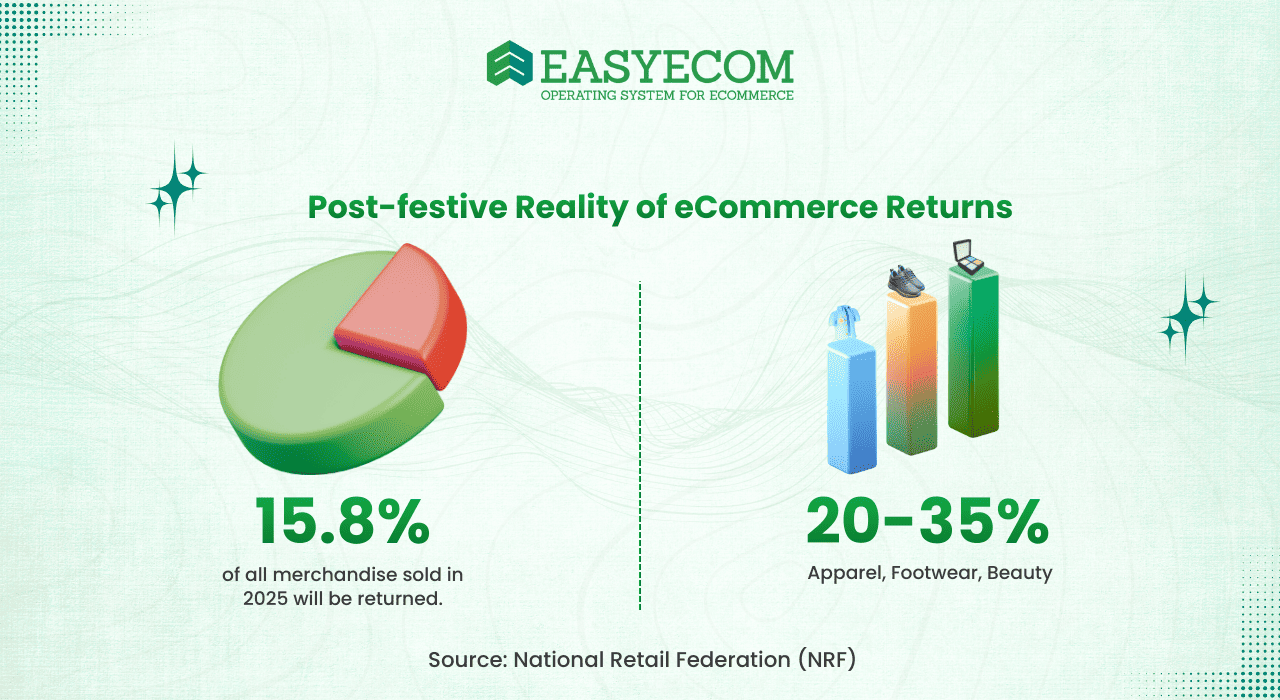
This means nearly 1 in 6 purchases come back.
After a festive, holiday, or end-of-season sale, return volumes spike even further because:
• Buyers order multiple sizes and keep the best fit.
• Gifts are exchanged or rejected.
• High discounting encourages trial-and-return behavior.
• Extended return windows push returns into a concentrated post-sale period.
For most warehouses, this sudden surge becomes unmanageable because returns are unpredictable and mixed in quality. Without automation, QC becomes subjective, inventory restocking gets delayed, and sellable stock stays locked.
Why Manual Returns QC and Restocking Fail for Most Brands
Peak return periods usually generate two to five times the normal volume. When returns depend on manual judgment, errors multiply. Here is what typically breaks:
1. Backlogs That Build Faster Than Teams Can Clear
Manual inspection slows down under pressure. Refund delays lead to negative customer sentiment and rising support loads.
2. Blind Spots in Inventory
Some returned products get restocked before QC, some never get restocked at all, and others get lost in transit between QC, refurbish, and putaway.
3. Revenue Leakages
Sellable stock gets written off due to inconsistent QC. High-value items slip back into sellable inventory despite flaws. Refurbishable stock is not separated correctly.
4. Zero Audit Trail
When decisions are made manually, brands struggle to trace why something failed QC, who inspected it, or what happened to it.
Manual processes collapse primarily because returns are unpredictable, condition-based, and require structured decision workflows.
How an Automated Returns Management System Improves QC, Inventory Sync, and Restocking Returned Inventory
Most brands think automation is only about speed, but the real value lies in standardization and predictability.
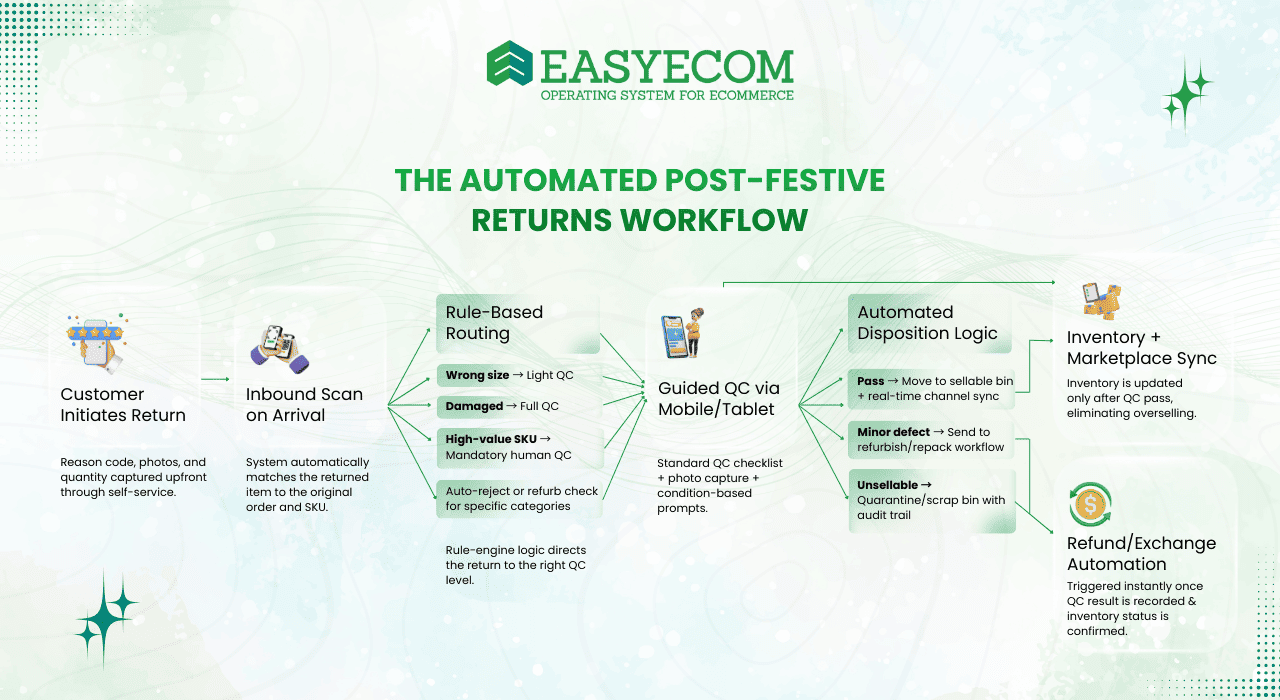
A strong returns management system organizes returns into a structured flow that works consistently. No matter who handles the return, the outcome is accurate and traceable.
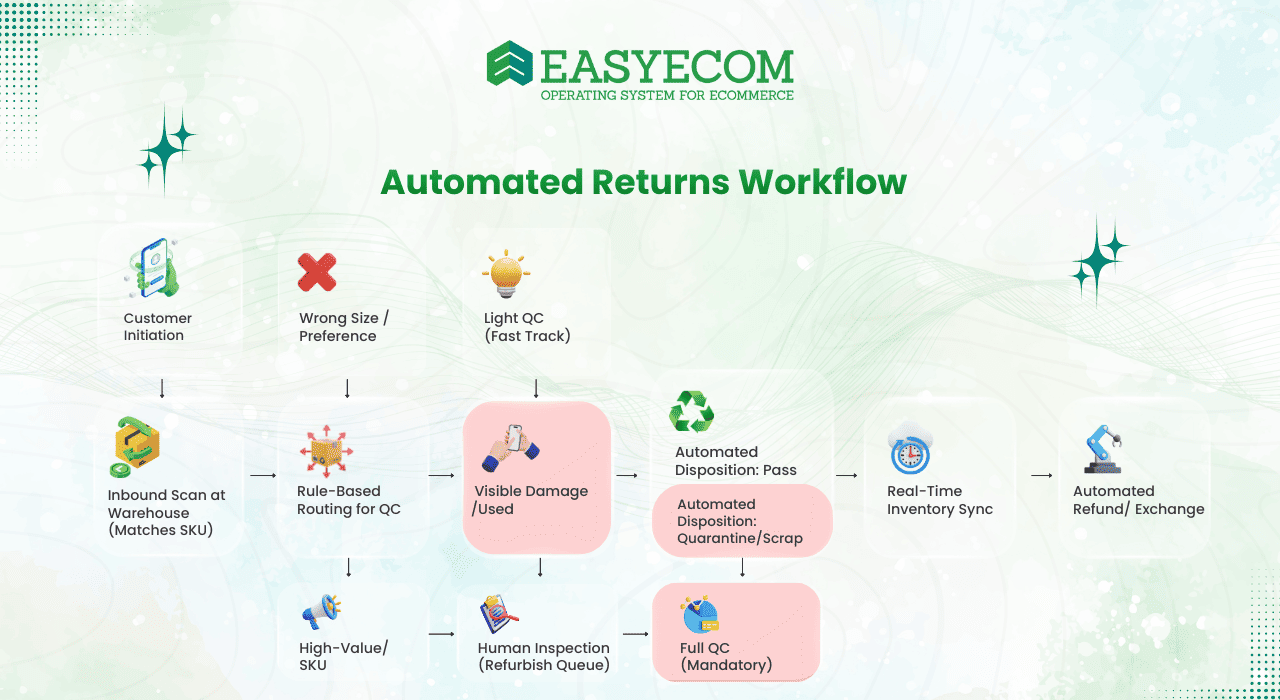
Automation removes guesswork and turns returns into controlled inventory events. Here is what that automated workflow looks like in a real ecommerce warehouse.
Automated Returns QC and Restocking Workflow: Step-by-Step
A well-designed automated returns workflow is the backbone of post-sale profitability. When each step in the visual above works in sync, the warehouse stops reacting and starts operating with intent.
Most importantly, automation removes the two things that destroy margins during peak return seasons: delay and inconsistency.
This reduces the biggest operational frictions brands face worldwide:
1. Slow refunds that frustrate customers
Automated triggers ensure customers aren't waiting for manual approvals. Refunds and exchanges move inside a predictable 24-48-hour window which is a major driver of repeat purchases.
2. Stock that sits idle for days
Returned items that could be resold get cleared quickly because there’s no backlog caused by judgment-based QC. Your fastest-moving SKUs return to live inventory almost immediately.
3. Revenue leakage from poor QC discipline
With a standardized checklist and audit trails, misclassified products, accidental restocking, and inconsistent grading decline sharply, directly improving stock recovery rates.
4. Overselling caused by premature restocking
Real-time inventory sync ensures nothing goes live until it has passed QC. This eliminates the “return goes live before inspection” problem that plagues many warehouses globally.
5. High operational cost per return
Automation cuts out redundant steps, removes subjective decisions, and reduces the dependency on large return-season temp teams. Your warehouse handles more volume with the same resources..
This flow creates a returns environment that is predictable, fast, and designed for scale.
The ROI of Automating Returns QC and Restocking Returned Inventory
Returns aren’t just a post-sale afterthought. They are a business-critical flow, often representing close to 20% of online purchases. With industry-wide return rates expected to reach 15.8-19.3% in 2025, managing returns efficiently is essential.
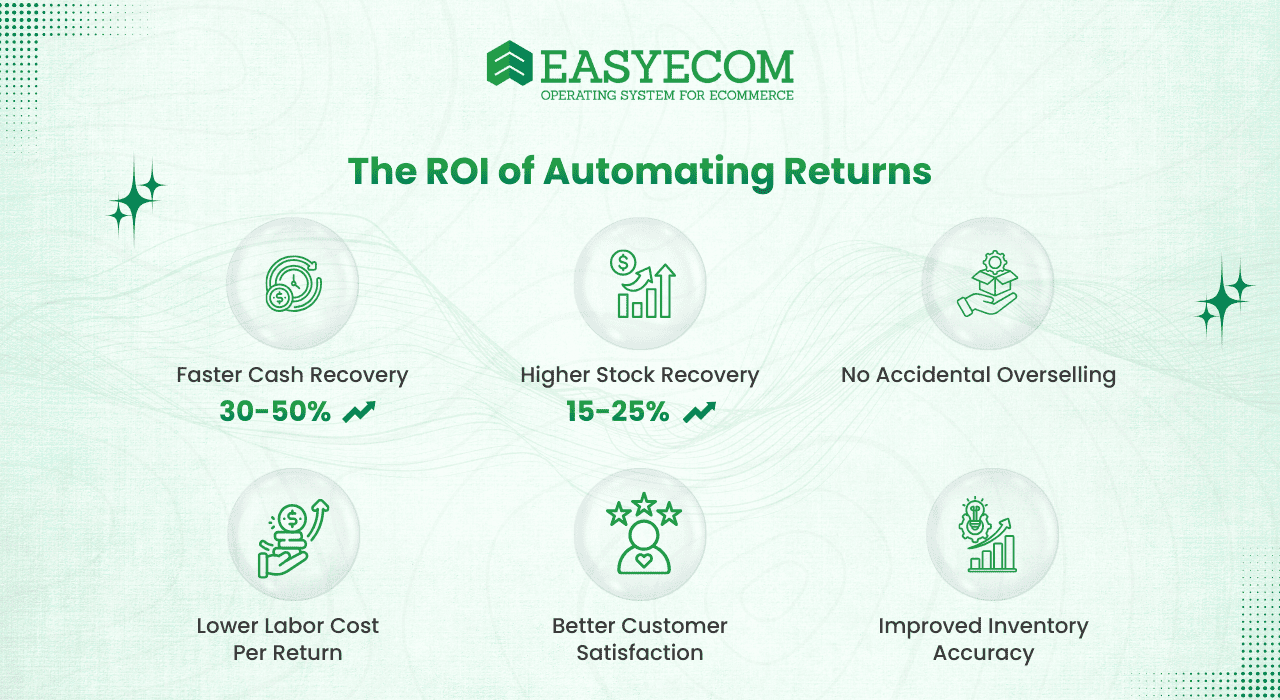
Every time you skip structured QC and restocking, you’re gambling with up to 30% of the item’s value in labour, logistics, potential resale value or write-downs. By automating QC, routing, disposition, and real-time inventory sync, you lock down that leakage. Returned items that are fit for resale go right back into stock, refunds and exchanges trigger faster, and your cash flow stays cleaner."
In a world where online return rates are rising rapidly, and consumer behavior (bracketing, variant orders, size swaps) pushes volume higher, building a scalable returns-management system is a competitive advantage.
Where Most Brands Still Get It Wrong in Returns Management
Restocking Before QC
This causes accidental overselling, customer complaints about used items, and 3 to 5 percent margin leakage in high-return categories.
No QC-Fail or Quarantine Bin Mapping
Without bin-mapping, failed items slip into sellable inventory or disappear in holding areas.
One-Size-Fits-All QC
Low-risk items do not need the same QC effort as high-value electronics. Incorrect routing slows throughput and inflates labor hours.
Returns Treated as Support Tasks Instead of Inventory Tasks
When returns sit with customer service instead of warehouse teams, refunds slow down, inventory accuracy breaks, and insights get lost.
No Analytics on Returns
Without SKU-level insights, brands cannot reduce preventable returns such as sizing issues, packaging problems, or courier damage.
A Realistic Post-Festive Returns Scenario with Automated QC and Restocking
Imagine a large D2C brand dealing with 5,200 returns in two weeks after a festive sale.
Here is how an automated returns management system handles it:
• About 70% are size or preference exchanges
• Roughly 20% are courier or packaging issues
• Nearly 10% show visible damage or use
With automated routing and QC:
• Light QC processes roughly 60% of items quickly
• About 45% of all returned stock gets restocked within the same day
• QC-fail items move to refurbish or quarantine queues
• Refunds are initiated within 24 to 48 hours
• Sellable stock re-enters live inventory without delay
Over time, this improves resale recovery percentages and reduces operational leakage.
Key Metrics to Track with a Returns Management System
To keep your returns workflow healthy and revenue-efficient, monitor a few core operational metrics continuously. These give you immediate visibility into where stock is stuck, where money is blocked, and where processes need tightening.
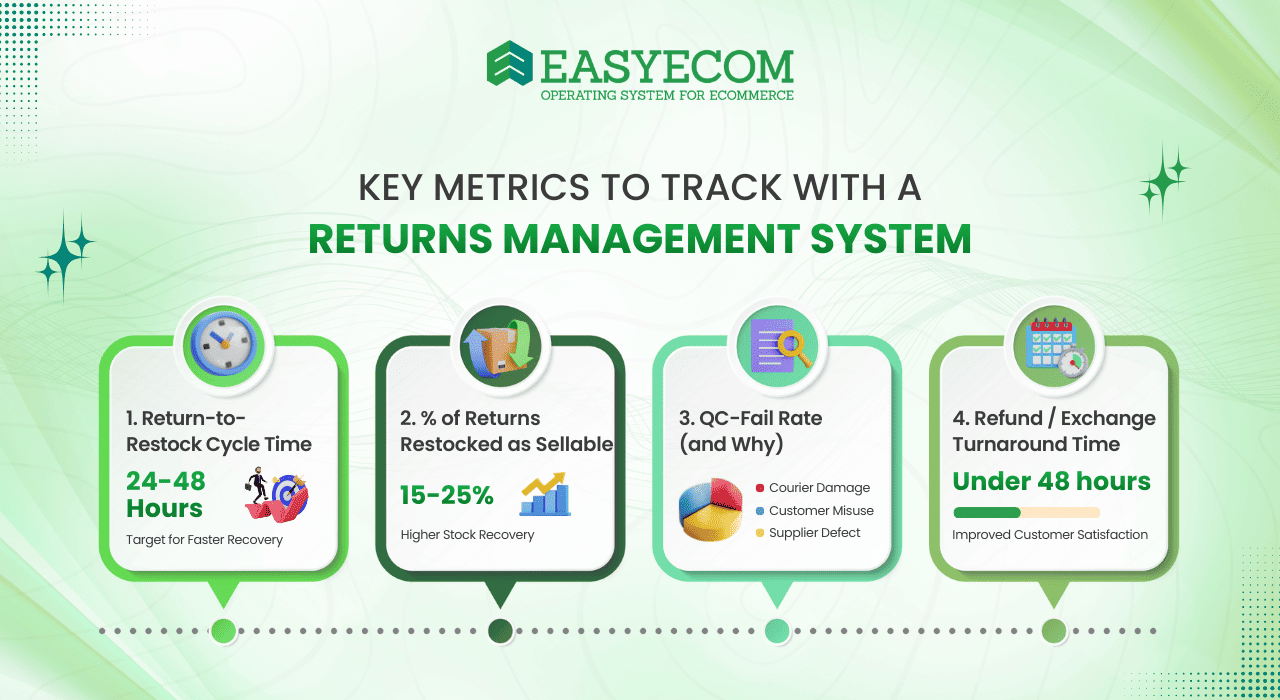
1. Return-to-Restock Cycle Time
How quickly a returned item moves from received → QC → live inventory.
Faster cycle times mean faster resale and faster cash recovery. Leading brands aim for 24-48 hours.
2. % of Returns Restocked as Sellable
Shows how effectively your team is triaging, inspecting, and salvaging stock.
This directly influences your recovered revenue percentage after festive peaks.
3. QC-Fail Rate (and Why)
Not just how many items fail QC - why they fail.
This tells you whether your losses stem from courier damage, customer misuse, packaging issues, or supplier defects.
4. Refund / Exchange Turnaround Time
A core customer experience metric.
Automation should consistently bring this to under 48 hours once returns arrive at the warehouse.
Want the Complete Metrics Framework?
To keep the blog concise, we’ve covered only the most essential KPIs here.
Download the full Returns Optimization ChecklistGet the complete list of metrics you should be tracking including:
- Inventory sync delay benchmarks
- Preventable return ratio scoring
- Cost-per-return breakdown model
- SKU-level return heatmaps
- Courier-level damage tracking
- And more (20+ expert metrics)
Getting Post-Festive Ready Before Your Next Sale
Do not wait for returns to hit after your next festive or seasonal sale.
Brands that prepare early recover more revenue and avoid warehouse chaos.
Here is what to prepare:
• Integrate return, inventory, QC, and sales systems before the sale begins
• Build rule-engine QC logic per SKU and return reason
• Set up bin mapping and disposition workflows
• Configure inventory to sync only after QC pass
• Plan staffing and guided workflows for peak return loads
A sale may create demand. Returns determine profit.
How EasyEcom Helps Automate Returns QC and Restocking Returned Inventory
EasyEcom connects returns, QC, and inventory in one unified system so brands can process returns with accuracy and speed at scale.
With EasyEcom, brands can:
• Centralize returns from all marketplaces and D2C
• Apply rule-based QC and bin mapping
• Guide warehouse teams with structured, auditable QC
• Prevent QC-fail stock from entering live inventory
• Auto-restock approved items instantly across channels
• Run refurbish and repack workflows easily
• Track cycle times, sync delays, and QC outcomes in real time
Returns stop being an operational burden and become controlled, revenue-protecting events.
Final Thought
Brands often celebrate top-line festive sales, but the true profitability lies in what happens after the sale. By automating returns QC, routing, and restocking returned inventory, ecommerce operations become predictable, faster, and significantly more profitable.
Returns are not a cost center. Returns are an opportunity when managed with structure and automation.